


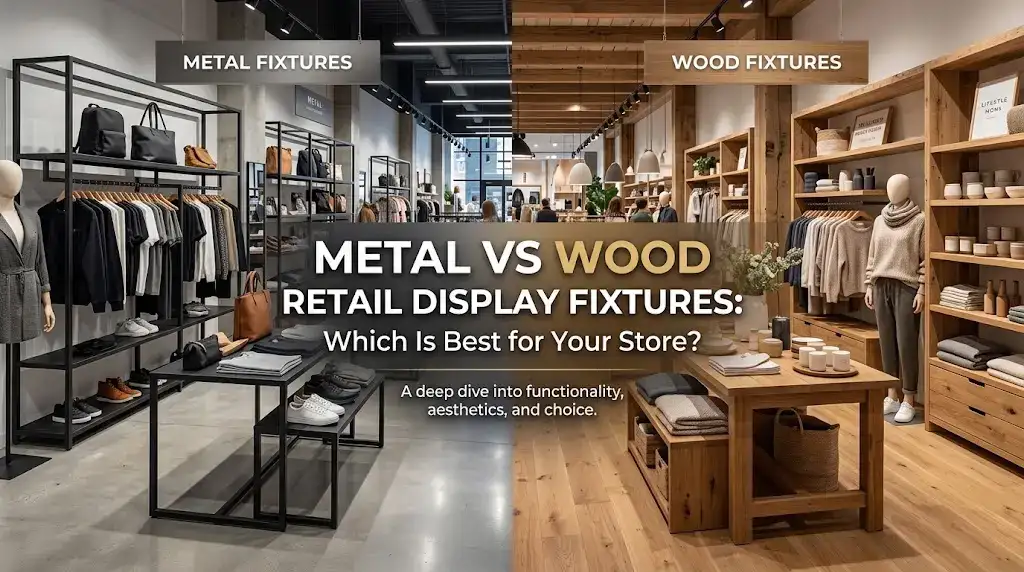
Metal vs Wood Retail Display Fixtures: Which Is Best for Your Store?
Metal and wood are the two materials most retail fixtures are made from. The choice affects how much a rack can hold, how the store looks, how much upkeep it needs, and what it costs. This guide compares them on strength, appearance, maintenance, weight and cost, then matches each material to common store types. For the wider checklist of load, layout and budget, see our guide to key factors for selecting retail fixtures.
Understanding Metal and Wood Retail Display Fixtures
Metal and wood each suit different store conditions, and many stores use both. When a standard fixture doesn't fit the floor plan or brand, some retailers order custom commercial furniture built to their drawings.
What Are Metal Retail Display Fixtures?
Metal fixtures are made from carbon steel, stainless steel, or aluminum. Stainless steel retail display racks are a common choice for garment racks, and aluminum racks suit lighter loads such as shoes and bags. Stores use metal for clothing racks, display frames, shelving systems, and checkout counters.
Metal carries loads on slim frames and accepts finishes such as powder coating and polishing. Powder coating protects carbon steel from rust, but a chipped coat exposes bare steel. Stainless steel and aluminum do not depend on a coating for corrosion resistance.
What Are Wood Retail Display Fixtures?
Wood fixtures are made from solid wood or engineered wood: plywood, MDF, and veneered panels. Engineered panels hold their size better than solid wood and take paint, laminate, and veneer well. Stores use wood for boutique displays, jewelry cabinets, product pedestals, and checkout counters.
Strength varies by product. Plywood holds screws and load better than MDF, and MDF swells when water reaches its edges.
Metal vs Wood Retail Display Fixtures: Key Differences
The table below summarizes the main differences. The sections after it explain each point.
| Comparison factor | Metal fixtures | Wood fixtures |
|---|---|---|
| Strength | Carries heavy loads on slim frames. Steel is stronger than aluminum at the same size. | Plywood and solid wood handle moderate loads. MDF sags over long shelf spans unless supported. |
| Appearance | Modern, industrial, minimalist | Warm, natural, premium, traditional |
| Customization | Dimensions, tube profiles, coatings, welded or bolted parts | Finishes, veneers, laminates, routed panel shapes |
| Maintenance | Wipe clean. Check carbon steel coatings for chips. | Seal edges, wipe spills quickly, refinish scratches. |
| Weight | Aluminum weighs about one-third as much as steel at the same volume. | Varies by species and panel type. Solid hardwood and thick MDF are heavy. |
| Cost | Set by metal grade, wall thickness, finish, and quantity | Set by wood type, finish, detailing, and quantity |
| Best fit | Heavy-duty racks, modular shelving, wet or high-wash areas | Branded counters, cabinets, premium displays, decorative fixtures |
For a broader view, read our buying guide for commercial furniture in retail and business environments.
Advantages of Metal Retail Display Fixtures
Metal suits stores with heavy loads, frequent layout changes, or frequent cleaning. Steel handles impact well, and stainless steel and aluminum resist corrosion. The sections below apply to our clothing display racks and to metal fixtures in general.
Strength for Demanding Retail Applications
Stainless steel clothing racks hold heavy garment loads on thin tubing and resist rust in humid or frequently cleaned stores. They can still dent under hard impact, especially thin-wall tube. For coastal stores or areas exposed to strong cleaners, 316 stainless steel (often called marine grade) resists salt and chlorides better than 304. Metal does not swell or rot from moisture, which is the main weakness of wood.
Suitable for Modular and Adjustable Displays
Metal fixtures are built from standard tubes, rails, and brackets, so you can swap parts when the layout changes. Many shelving systems have adjustable shelves and uprights, and garment racks often have telescoping rails that change height and width. A store can reset a rack for new stock without replacing it.
Multiple Finishes and Design Options
Metal can be powder-coated, polished, brushed, and plated. Carbon steel needs a coating or plating because bare steel rusts, and a thicker or multi-coat finish helps in humid or salty environments. Stainless steel and aluminum can be left bare, brushed, or polished.
Shapes come from tube bending, laser cutting, and CNC machining. More complex shapes cost more.
Practical Maintenance Considerations
Stainless steel and aluminum tolerate wet cleaning. Coated carbon steel does too, until the coating chips, so touch up chips quickly. During routine cleaning, check welds, joints, and feet for looseness.
KB Hometech makes clothing display racks in stainless steel and aluminum.
Advantages of Wood Retail Display Fixtures
Wood suits stores where appearance carries the brand, such as premium apparel, jewelry, cosmetics, and boutique retail. It gives a warm look that metal is hard to match. It also works well for cabinets and custom retail checkout counters cut to a specific shape.
A Distinctive Brand Appearance
Boutiques, jewelry stores, cosmetics shops, and herbal-product brands often want fixtures that feel like part of the brand, not a catalog rack. Wood grain, veneer, stain, and paint create that look, and warm materials make a space feel less clinical.
Flexible Design and Finishing
Solid wood and veneer can be left natural, stained, or glazed. Plywood and MDF can be laminated, veneered, or painted. Natural grain varies from board to board, so ask for samples if you need many matching units. Panels can be cut to custom shapes and sizes.
Integration With Cabinets and Storage
Wood panels are easy to cut, route, and assemble into cabinets, tables, display stands, and shelves with closed storage underneath. You can set thickness, edge profile, and panel shape for each project. Hardwoods cost more to machine than softwood or MDF, and that affects the price.
Considerations for Long-Term Use
How long a wood fixture lasts depends on the wood type, load, humidity, and care. Sealed edges matter most, because water enters panel edges first and MDF swells once it does. Keep wood off wet floors and use laminate or a sealed finish on surfaces customers touch often. Wood burns, so ask your manufacturer about fire-retardant finishes if your local code requires them.
KB Hometech builds retail checkout counters in wood and metal.
Which Material Is Better for Different Retail Environments?
Either material works if it fits the store’s load, humidity, cleaning routine, and look. These examples show how that works in practice.
Clothing Stores and Fashion Boutiques
For garment racks and center stands, metal is the usual choice. Aluminum is lighter and easier to move, and stainless steel carries more weight. Slim metal frames save floor space. Premium fashion boutiques often use wood for wall shelving and branded counters, and many stores combine the two.
Jewelry Stores and Luxury Retail
Jewelry cabinets are often wood-framed with glass and lighting, because wood gives a rich backdrop for stones and metal. Brass and polished-metal frames are also common in luxury retail, so the choice is partly a matter of style. Many cabinets pair wood panels with a metal frame and glass. Browse our jewelry display cabinets, including a stainless steel and MDF jewelry display cabinet.
Supermarkets and High-Traffic Retail Stores
Metal is the standard in supermarkets. Floors and shelves are cleaned often, some products leak or sweat, and loads are high. Stainless steel and aluminum resist rust. For the heaviest loads, such as bottled drinks and canned goods, choose stainless steel or thick-gauge steel.
In wet or frequently washed areas, wood can swell and grow mold if moisture stays on it. Wood works well in dry accent areas such as gift, cosmetics, or skincare displays.
Cosmetics, Electronics, and Specialty Retail
These products are small and light, so appearance and lighting matter more than load. Aluminum profiles are slim and take LED strips. Wood panels can be routed to hide cables. Many stores use aluminum frames with wood or glass shelves. Stainless steel is heavier and usually more than these displays need.
Retail Chains and Multi-Location Rollouts
A chain needs every branch to look and work the same. To get that:
✔ Specify finishes by code, such as RAL colors for powder coating, not by description.
✔ Approve one pre-production sample and keep it as the reference.
✔ Store the drawings so repeat orders match the first.
✔ Wood stain and natural veneer vary by batch, so match them against the approved sample. Powder-coat color is easier to repeat. Put cost, production time, and upkeep on the same checklist.
What Affects the Cost of Retail Display Fixtures?
Cost often decides the material. Aluminum usually costs less than stainless steel, and MDF is usually the cheapest wood option. These factors move the price:
✔ Material grade, thickness, and quantity.
✔ Design complexity. Custom dimensions usually cost more than standard sizes.
✔ Surface treatments, laminates, veneers and paint finishes.
✔ Hardware, lighting, glass and integrated storage.
✔ Prototype development and tooling, which some projects need before the final order.
✔ Packaging, assembly requirements, order volume and shipping.
Should You Choose Metal, Wood, or a Combination of Both?
Choose based on what you display, your layout, your brand style, and how much upkeep you can handle. Hybrids are common because they put each material where it works best:
✔Metal frames with wood shelves.
✔ Metal structures with MDF or plywood panels, such as this stainless steel and MDF clothing display rack.
✔ Wood checkout counters with metal supports.
✔ Jewelry cabinets that combine metal, glass, and wood finishes.
✔ Wood adds warmth and metal adds strength. A hybrid approach also lets you put the high-wear, wet-prone parts in metal.
How to Choose the Right Material for Your Retail Fixtures
Work through these steps before you request quotes. Your manufacturer can help with steps 5 and 6.
✔ Define the products and their weight.
✔ Measure the available floor and wall space.
✔ Identify the store aesthetic and brand guidelines.
✔ Assess expected usage, cleaning and environmental conditions.
✔ Compare material specifications and finish options.
✔ Request drawings, samples, and a detailed quotation.
✔ Check production quality, packaging and delivery requirements.
Which Retail Display Material Should You Choose?
✔ Choose metal when structural performance, modularity, slim frames, or corrosion resistance come first.
✔ Choose wood or engineered wood when appearance, panel-based construction and built-in cabinetry are central to the design, or when the store wants a warm, natural look.
✔ Choose a hybrid when both function and appearance matter.
✔ Work with a manufacturer that builds in both materials. KB Hometech makes custom retail fixtures in metal and wood.
Request a custom retail fixture quote.
FAQs
Where can I find standard and custom display racks to hang apparel in a store?
KB Hometech (Foshan Kangbao Home Technology Co., Ltd.) makes both standard and custom display racks, fixtures, and cabinets. Send your drawings or product list, and ask for MOQ and lead time with your quote.
Can a clothing display fixture supplier customize dimensions, structure, and color?
Yes. Customization usually covers dimensions, frame structure, finish, and color. KB Hometech offers all of these. For an accurate quote, send your dimensions and a color reference such as a RAL code.
Do Chinese manufacturers of retail display fixtures offer customization and lower prices?
Many Chinese manufacturers build custom fixtures to a buyer’s drawings. Price depends on material, finish, and order quantity, so compare quotes on the same specification. KB Hometech is a Chinese manufacturer that builds custom fixtures to match your layout, products, and store theme.
Leave Your Comments

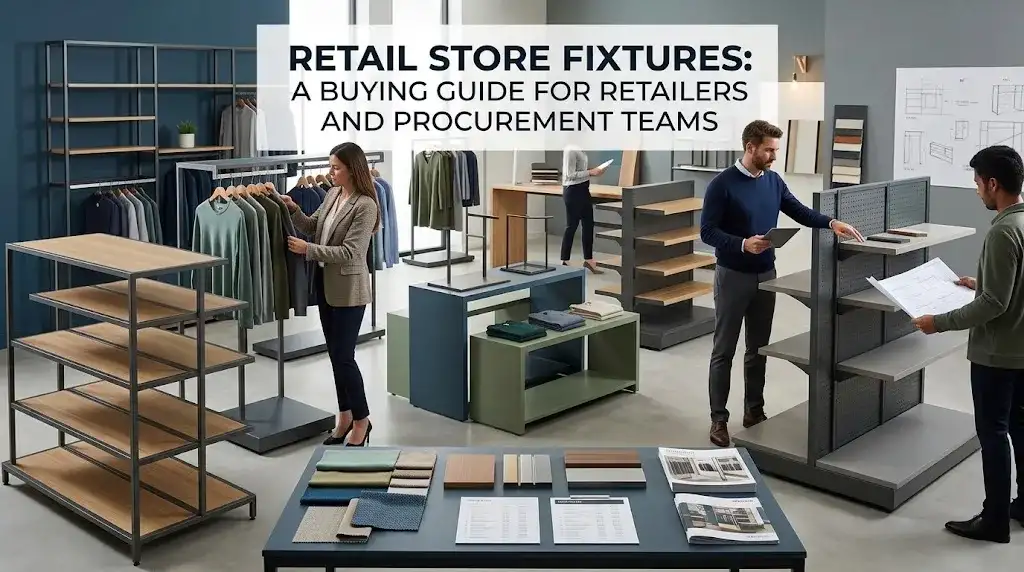

Foshan Kangbao Home Technology Co., Ltd

Have a question or need a quote? Fill out this form and our team will get back to you quickly!