


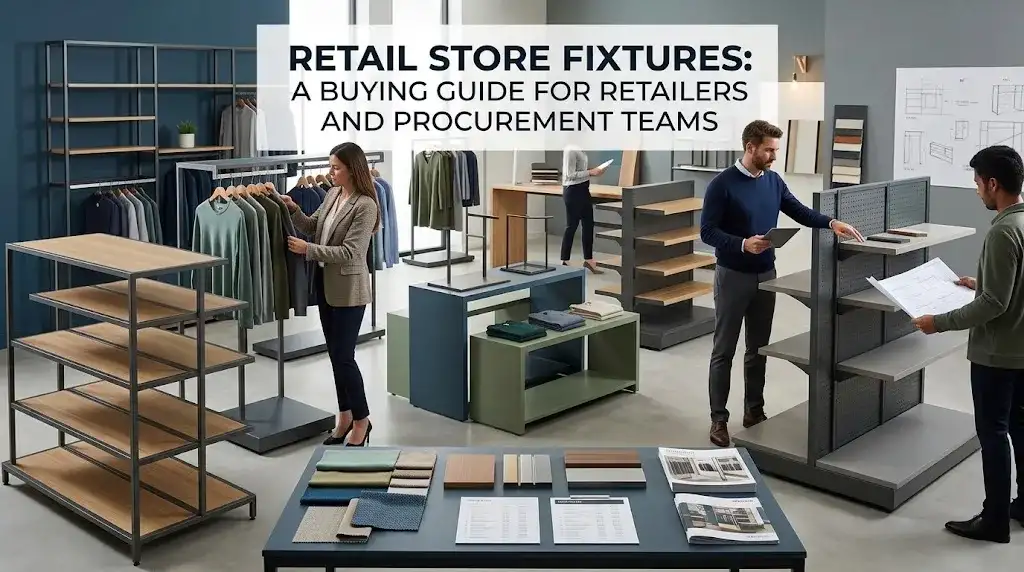
Retail Store Fixtures: A Buying Guide for Retailers and Procurement Teams
Retail store fixtures influence how merchandise is displayed, how customers access products, and how staff manage daily store operations. For retailers, distributors, and procurement teams, selecting the right fixtures requires more than comparing appearance or unit price. Product dimensions, load requirements, store layout, materials, maintenance, and manufacturing specifications all affect a fixture's suitability.
This guide covers common retail fixture types, material options, custom versus standard designs, and the key considerations when sourcing fixtures from a manufacturer.
What Are Retail Store Fixtures?
Retail store fixtures are structures used to display, organize, store, or present merchandise in commercial retail environments. Depending on their design, they may allow customers to handle products directly or keep merchandise behind protective glass.
Common examples include checkout counters, display cabinets, clothing racks, shelving units, and product display stands.
Retail Fixtures vs. Commercial Furniture
Retail fixtures and commercial furniture serve different purposes, although some products fall into both categories.
✔ Used primarily to display, organize, and store merchandise. Examples include clothing racks, jewelry cabinets, and retail shelving.
✔ Designed to present products, often for visual merchandising, promotions, or showroom use. Some restrict direct customer access to the merchandise.
✔ Supports workplace and operational activities. Examples include office desks, chairs, meeting tables, and certain checkout counters.
The distinction depends on the product's intended function, not its name alone. For example, a checkout counter may provide a transaction surface, storage, and space for point-of-sale (POS) equipment.
Why Retail Store Fixtures Matter
Fixture selection affects several aspects of store planning and operations.
Product Visibility and Presentation
Fixture height, shelf spacing, lighting, and display orientation determine how merchandise is presented. The appropriate configuration depends on product dimensions, packaging, and the intended viewing angle.
For example, clothing racks need suitable hanging space, while jewelry cabinets may require glass panels and integrated lighting.
Space Utilization and Customer Access
Fixtures must fit the available floor area without obstructing entrances, exits, checkout zones, or customer pathways. Vertical shelving can increase display capacity, but its dimensions and placement must remain compatible with the store layout.
Procurement teams should also consider staff access for replenishment, cleaning, and routine maintenance.
Brand Consistency Across Locations
Retail chains often require consistent fixture dimensions, finishes, colors, and configurations across multiple stores. Standardized specifications can help maintain a uniform appearance and simplify repeat orders.
For multi-location projects, buyers should document approved designs and material specifications before production begins.
Daily Store Operations
Fixtures should support the way merchandise is handled and replenished. Shelf access, storage capacity, hardware, surface finishes, and ease of cleaning all affect ongoing maintenance requirements.
These factors matter most when fixtures are used intensively or installed across multiple locations.
Common Types of Retail Store Fixtures
The appropriate fixture depends on the merchandise, display method, available space, and operational requirements.
Clothing Display Racks
Clothing display racks hold garments on hangers and make it easier to organize merchandise by size, style, or category. Freestanding racks can be placed within a sales area, while wall-mounted options use perimeter space.
When sourcing clothing racks, consider:
✔ Hanging capacity and expected garment load
✔ Rack dimensions and available installation space
✔ Rail height and usable hanging length
✔ Frame material and surface finish
✔ Stability, assembly, and maintenance requirements
Explore clothing display racks.
Shoe and Bag Display Racks
Shoe and bag display racks accommodate footwear, handbags, and accessories. Depending on the product range, they may use individual shelves, multiple display levels, or a combination of configurations.
Buyers should assess shelf dimensions, product visibility, frame stability, and how many items each unit needs to hold. Wall-mounted and freestanding designs suit different layout needs.
Explore the aluminum shoe and bag display rack.
Jewelry Display Cabinets
Jewelry display cabinets combine product presentation with restricted access. Key design considerations include glass panels, lighting, locking mechanisms, and internal storage.
When evaluating a cabinet, check glass thickness and suitability, door and lock hardware, lighting requirements, compartment dimensions, and access for cleaning and maintenance. The final configuration should reflect the merchandise's value, size, and security requirements.
Explore jewelry display cabinets.
Retail Checkout Counters
Retail checkout counters provide a work surface for transactions and space for POS equipment. Depending on the design, they may also include storage compartments, cable access, drawers, or space for small merchandise.
Before ordering, confirm the counter dimensions, equipment layout, working height, storage requirements, and any cable-management needs. For multi-location projects, standardizing these specifications can simplify installation and future replacement.
Explore retail checkout counters and the stainless steel retail checkout counter.
Other Retail Display Fixtures
Other common options include wall shelves, display tables, gondola shelving, end-cap displays, freestanding shelves, and mannequins.
Their suitability depends on the merchandise, available floor space, required display capacity, and store format. Buyers should evaluate each unit against its intended application rather than choosing fixtures solely for appearance.
How to Choose Retail Store Fixtures
Clear requirements help buyers compare manufacturers and avoid specification problems during production.
1. Assess the Store Layout
Measure the installation area and document the location of entrances, exits, checkout zones, storage areas, and customer pathways. Consider how the fixtures will affect circulation and whether staff can access merchandise for replenishment.
For store chains, use consistent measurement and documentation methods across locations.
2. Define the Fixture's Purpose
Determine whether the fixture will support direct product access, display-only presentation, storage, transactions, or a combination of functions.
This decision affects the required structure, dimensions, hardware, and material selection. For example, checkout counters may need space for POS equipment and concealed storage, while display cabinets may prioritize visibility and restricted access.
3. Confirm Product Dimensions and Load Requirements
Document the dimensions, Weight, and quantity of the products each fixture must accommodate. For shelving and racks, specify the expected load per shelf or hanging rail and the total intended load.
Ask the manufacturer to confirm the applicable load capacity and any installation requirements. Do not assume that two fixtures with similar dimensions have the same load rating.
4. Check Accessibility and Replenishment Requirements
The layout should provide sufficient space for customers, staff, and any equipment used to move merchandise. When determining fixture placement, consider shelf access, stock replenishment, and cleaning.
The required clearances will depend on the site layout and applicable accessibility and building requirements.
5. Plan for Maintenance
Review expected cleaning frequency, moisture exposure, surface wear, and the availability of replacement hardware or components.
Ask how to maintain the selected materials and finishes. For multi-location projects, consistent maintenance requirements can simplify store operations.
6. Allow for Future Layout Changes
If the store regularly changes product categories or promotional displays, consider modular, adjustable, or movable fixtures where appropriate.
Custom-built units may be more suitable when standard products cannot meet specific dimensions, integrated storage needs, or brand-specific design requirements.
Retail Store Fixture Materials Compared
Material selection should account for load, environmental conditions, appearance, maintenance, and cost. A material's suitability depends on its grade, Thickness, construction, and finish, not simply its name.
| Material | Typical applications | Main considerations |
|---|---|---|
| Stainless steel | Checkout counters, racks, and fixtures requiring corrosion resistance | Strength, grade, finish, Weight, cost, and cleaning requirements |
| Aluminum | Lightweight frames, shelving, and display racks | Weight, structural design, alloy, finish, and intended load |
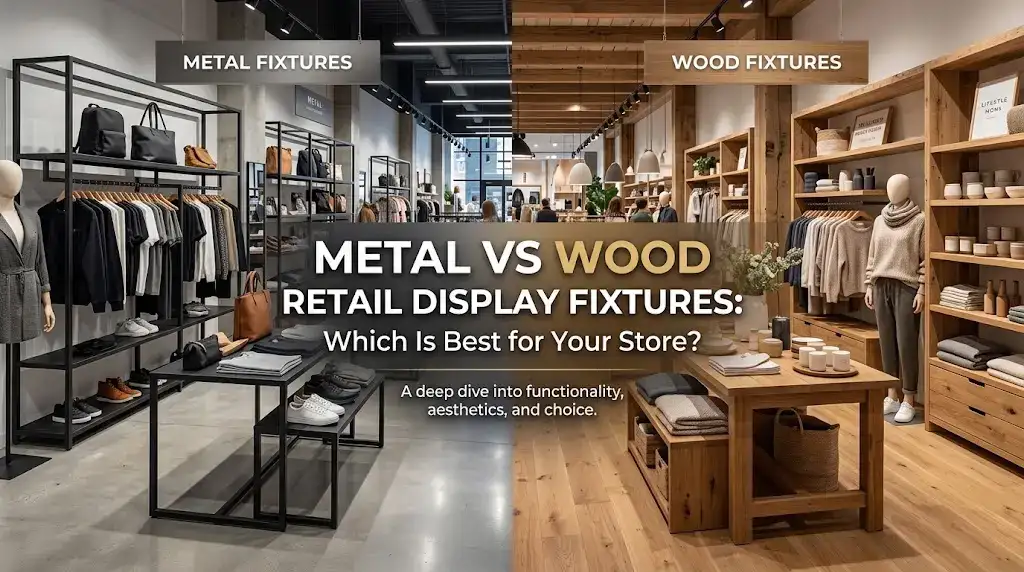
| MDF and wood | Shelves, panels, counters, and decorative fixtures | Moisture exposure, surface finish, edge protection, durability, and cost |
| Glass | Display cabinet panels and protective screens | Thickness, safety requirements, support, cleaning, and breakage risk |
| Acrylic | Display panels, product stands, and transparent components | Scratch resistance, heat exposure, Thickness, and structural suitability |
Stainless Steel
Stainless steel suits fixtures that require strength, durability, and corrosion resistance. Its performance depends on the grade, construction, finish, and operating environment.
For checkout counters and clothing racks, buyers should confirm the material specification, structural design, load requirements, and cleaning needs. Stainless steel may cost more upfront than some alternatives, so the decision should reflect the intended service conditions and maintenance requirements.
See the stainless steel clothing display rack.
Aluminum
Aluminum offers a relatively lightweight option for frames and display structures. Its suitability depends on the alloy, section dimensions, joints, finish, and intended load.
For shoe and bag display racks, confirm that the design can support the expected merchandise weight and remain stable under normal use.
MDF and Wood
MDF and wood can provide a range of finishes for counters, shelving, and decorative panels. The appropriate option depends on the required appearance, structural role, moisture exposure, and expected wear.
For fixtures used in humid environments or areas requiring frequent cleaning, ask about suitable finishes, edge protection, and maintenance requirements.
See the MDF-panel clothing display rack.
Glass
Glass is commonly used in display cabinets where visibility and product protection are important. Buyers should confirm the appropriate glass type and Thickness, support arrangement, door hardware, and any applicable safety requirements.
Glass can be combined with metal or wood structures, but its suitability depends on the cabinet design and intended use.
Acrylic
Acrylic can be used for transparent display panels, product stands, and other display components. It provides clear product visibility but may scratch easily and be susceptible to heat-related damage.
Consider the required Thickness, support, cleaning method, and exposure conditions before specifying acrylic for a fixture.
Custom Retail Store Fixtures vs. Standard Fixtures
Custom and standard fixtures serve different procurement needs. The choice depends on project requirements, budget, timing, and the extent of design flexibility needed.
FactorCustom fixturesStandard fixtures
Dimensions Designed around specified requirements Available in predetermined sizes
Design Greater flexibility Limited to available configurations
Branding Can incorporate project-specific finishes and features Depends on available options
Store layout Can accommodate unusual layouts Requires compatibility with existing dimensions
Lead time May require additional design and production time May be faster when stock is available
Initial cost Can be higher due to design and setup Often lower for comparable standard products
Repeat orders Requires controlled specifications Depends on product availability and consistency
When Custom Fixtures Make Sense
Custom fixtures may be appropriate when a project requires non-standard dimensions, integrated storage, specific materials, or a consistent design across multiple locations.
They can also help accommodate specialized product dimensions or site constraints. Before production, confirm drawings, material specifications, finishes, hardware, and approval procedures.
When Standard Fixtures May Be Better
Standard fixtures may suit stores with conventional layouts and products that fit available dimensions. They can reduce design work and may offer shorter lead times when the required quantities are available.
Compare the full quotation and delivery schedule rather than assuming every standard fixture will be cheaper or faster.
How to Plan a Retail Fixture System
A fixture system should account for the relationship between merchandise, customer movement, storage, and checkout operations.
Map the Store Layout
Identify entrances, exits, product zones, display areas, checkout locations, and storage areas. Determine where fixtures are needed and how they will affect circulation and staff access.
For multi-location projects, document the approved layout and fixture specifications for each site.
Organize Product Zones
Group merchandise according to the store's operating plan. For example, a layout may include new arrivals, core products, promotional items, accessories, and checkout areas.
The arrangement should reflect the actual product range and merchandising strategy rather than follow a universal sequence.
Balance Display Capacity and Accessibility
A fixture should accommodate the required merchandise without compromising product access or operational needs. Consider shelf spacing, hanging capacity, stock storage, and access for replenishment.
Increasing display density isn't always beneficial if it makes products hard to reach or maintain.
Standardize Fixtures Across Locations
Where consistent presentation is required, document dimensions, materials, finishes, colors, hardware, and assembly requirements.
Use approved drawings and specifications to help maintain consistency across repeat production runs.
How to Source Retail Store Fixtures from a Manufacturer
A structured sourcing process helps buyers compare quotations and reduce the risk of discrepancies between approved designs and delivered products.
1. Prepare a Fixture Specification
Provide the manufacturer with the following information:
✔ Fixture type and intended application
✔ Overall dimensions and installation requirements
✔ Product dimensions and expected load
✔ Material grades, thicknesses, and finishes where specified
✔ Color and design requirements
✔ Required features, hardware, and storage
✔ Order quantity and customization needs
✔ Destination and delivery requirements
The more complete the specification, the easier it is to evaluate whether quotations cover the same requirements.
2. Share Drawings or Reference Samples
Provide dimensioned CAD drawings where available. If drawings are not available, a detailed sketch, reference image, or existing sample can help communicate the design.
Confirm which dimensions, materials, and features are mandatory and which the manufacturer can adjust by agreement.
3. Request a Sample or Prototype When Appropriate
For a new supplier, unfamiliar design, or substantial custom order, sample approval can help identify issues before bulk production.
Review dimensions, material quality, finish, hardware, assembly, and function. Record any required changes and obtain approval of the final specification before authorizing production.
4. Compare Quotations consistently
Unit price is only one part of the purchasing decision. Compare:
✔ Material and construction specifications
✔ Included hardware and accessories
✔ Packaging requirements
✔ Minimum order quantity (MOQ)
✔ Production lead time
✔ Customization and setup costs
✔ Quality inspection arrangements
✔ Shipping arrangements and delivery terms
Ensure each supplier is quoting the same design, quantity, and scope of work.
5. Approve Final Production Specifications
Before placing the order, confirm the approved drawings, bill of materials where applicable, finishes, dimensions, quantities, inspection criteria, packaging, and delivery requirements.
Keep a documented record of the approved version to reduce the risk of production errors or issues with repeat orders.
How to Evaluate a Retail Fixture Manufacturer
Base manufacturer selection on demonstrated capabilities and the ability to meet the project's specifications.
Manufacturing Capabilities
Confirm that the supplier can produce the required fixture types and work with the specified materials. Depending on the project, this may include metal frames, aluminum structures, wood or MDF panels, glass, acrylic, and surface finishing.
Ask which processes are performed in-house and which subcontractors handle, especially when that distinction affects quality or delivery.
Quality Control
Ask how the manufacturer checks incoming materials, dimensions, welding, fasteners, surface finishes, assembly, and packaging.
Request relevant inspection records, material documentation, or certificates where applicable. Verify any claimed certification against the issuing organization and the certificate's scope.
Customization and Production Capacity
Confirm whether the supplier can meet the required dimensions, design, and finish. Discuss production capacity, expected lead time, order quantities, and the process for handling design changes.
For retail chains and distributors, also ask how they control repeat orders to maintain consistency in materials, dimensions, and appearance.
Export and Packaging Arrangements
For international orders, clarify packaging specifications, shipment preparation, delivery responsibilities, and destination requirements.
Ask for relevant examples of comparable work where available. Supplier references, approved samples, and documented production capabilities provide more useful evidence than general claims of experience.
Retail Fixture Quality Control and Pre-Order Checklist
Before authorizing bulk production, use this checklist to confirm the order is ready.
✔ Store measurements and installation requirements confirmed
✔ Fixture types and quantities finalized
✔ Product dimensions and load requirements documented
✔ Materials, grades, and finishes approved
✔ Drawings and design revisions approved
✔ Hardware, doors, drawers, and other features specified
✔ Sample or prototype reviewed where required
✔ Minimum order quantity and pricing confirmed
✔ Production lead time agreed
✔ Inspection and acceptance criteria documented
✔ Packaging and shipping requirements confirmed
✔ Final order specifications approved by both parties
During inspection, verify the delivered fixtures against the agreed specifications. Check dimensions, material and finish consistency, welds and fasteners where applicable, glass or acrylic condition, assembly, load-related requirements, and packaging.
Common Mistakes When Buying Retail Store Fixtures
Several purchasing risks can be reduced through careful planning and documentation.
✔ Evaluate structural suitability, product compatibility, maintenance, and total cost alongside design.
✔ Confirm installation dimensions and clearances before ordering. Incorrect measurements can lead to modifications, delays, or unusable fixtures.
✔ Match materials and finishes to the expected load, environment, cleaning requirements, and intended service conditions.
✔ Follow the manufacturer's confirmed load limits and intended use. Don't assume similar-looking racks or shelves have identical capacities.
✔ Consider specifications, packaging, lead time, inspection, shipping, and potential costs associated with modifications or replacement.
✔ For new designs or untested suppliers, evaluate a sample before authorizing bulk production where practical.
✔ Ensure both parties approve the same drawings, materials, quantities, finishes, and delivery requirements before production starts.
Frequently Asked Questions About Retail Store Fixtures
What are the most common types of retail store fixtures?
Common types include checkout counters, clothing racks, shoe and bag display racks, jewelry cabinets, wall shelving, gondola shelving, display tables, and freestanding display units. The right choice depends on the merchandise, layout, and operational needs.
Which materials are used to manufacture retail fixtures?
Common materials include stainless steel, aluminum, wood, MDF, glass, and acrylic. Material selection depends on the fixture's structure, load requirements, environment, finish, and intended use.
Are custom retail fixtures better than standard fixtures?
Neither option is universally better. Custom fixtures may suit specialized dimensions, layouts, or branding requirements, while standard fixtures may be appropriate when available sizes and configurations meet the project's needs.
How do I choose the right retail fixture manufacturer?
Evaluate the manufacturer's relevant production capabilities, quality-control procedures, customization options, capacity, lead times, and packaging arrangements. Compare quotations against the same approved specifications.
What information should I provide when requesting a quotation?
Provide the fixture type, drawings or reference images, dimensions, material and finish requirements, expected load, quantity, customization details, and destination. Include packaging and delivery requirements so the manufacturer can prepare a more complete quotation.
Custom Retail Store Fixtures from KB Home Tech
KB Home Tech, operated by Foshan Kangbao Home Technology Co., Ltd., offers retail fixtures and commercial furniture, including checkout counters, display cabinets, and clothing display racks.
For a standard or custom fixture project, prepare your required dimensions, materials, finishes, quantities, and functional specifications before requesting a quotation. Clear requirements help define the order scope and let you evaluate the proposed design, production schedule, and pricing against your needs.
To discuss your requirements, contact KB Home Tech.
Leave Your Comments


Foshan Kangbao Home Technology Co., Ltd

Have a question or need a quote? Fill out this form and our team will get back to you quickly!